Specify the purpose before the opening
Explain what the removal needs to achieve: expose an area for investigation, prepare a room for new finishes or create an opening shown in the construction plans. Those purposes may lead to different boundaries and temporary conditions.
Mark the exact surfaces and components to remain. A drawing, annotated photograph and site walkthrough can clarify edges, retained fixtures and the next trade’s needs. A vague instruction to “open the wall” is not enough to establish a complete scope.
Separate finishes from supporting elements
Plaster, drywall, tile and backing can conceal framing and utilities. The visual thickness of a wall does not prove whether it supports another part of the building. Any structural alteration needs the responsible design, approvals and temporary-support plan before removal.
Identify the appropriate trade responsibilities for electrical, plumbing or other services. In a shared building, a line passing through the work area may serve neighboring spaces. Isolation should be confirmed rather than inferred.
Review the Sherman Oaks property context
The neighborhood is within Los Angeles, but its name does not uniquely identify a community-plan area. Use the property address to check the applicable parcel record, including the distinction between southern Sherman Oaks and Van Nuys–North Sherman Oaks planning contexts.
Coordinate the proposed removal with the construction documents and relevant approvals. An investigation opening, an interior finish strip and a structural opening are not interchangeable descriptions for review purposes.
Protect retained rooms and materials
Discuss how the work area will be separated and how debris reaches the collection point. Fragile existing finishes may need different handling from surfaces already scheduled for replacement. Set realistic expectations for retained edges and later patching.
Before disturbance, review required material surveys and specialist responsibilities. A general demolition scope does not automatically include hazardous-material testing, abatement or special disposal. If unexpected conditions appear, document them and pause the affected scope for a decision.
Define the handoff and estimate
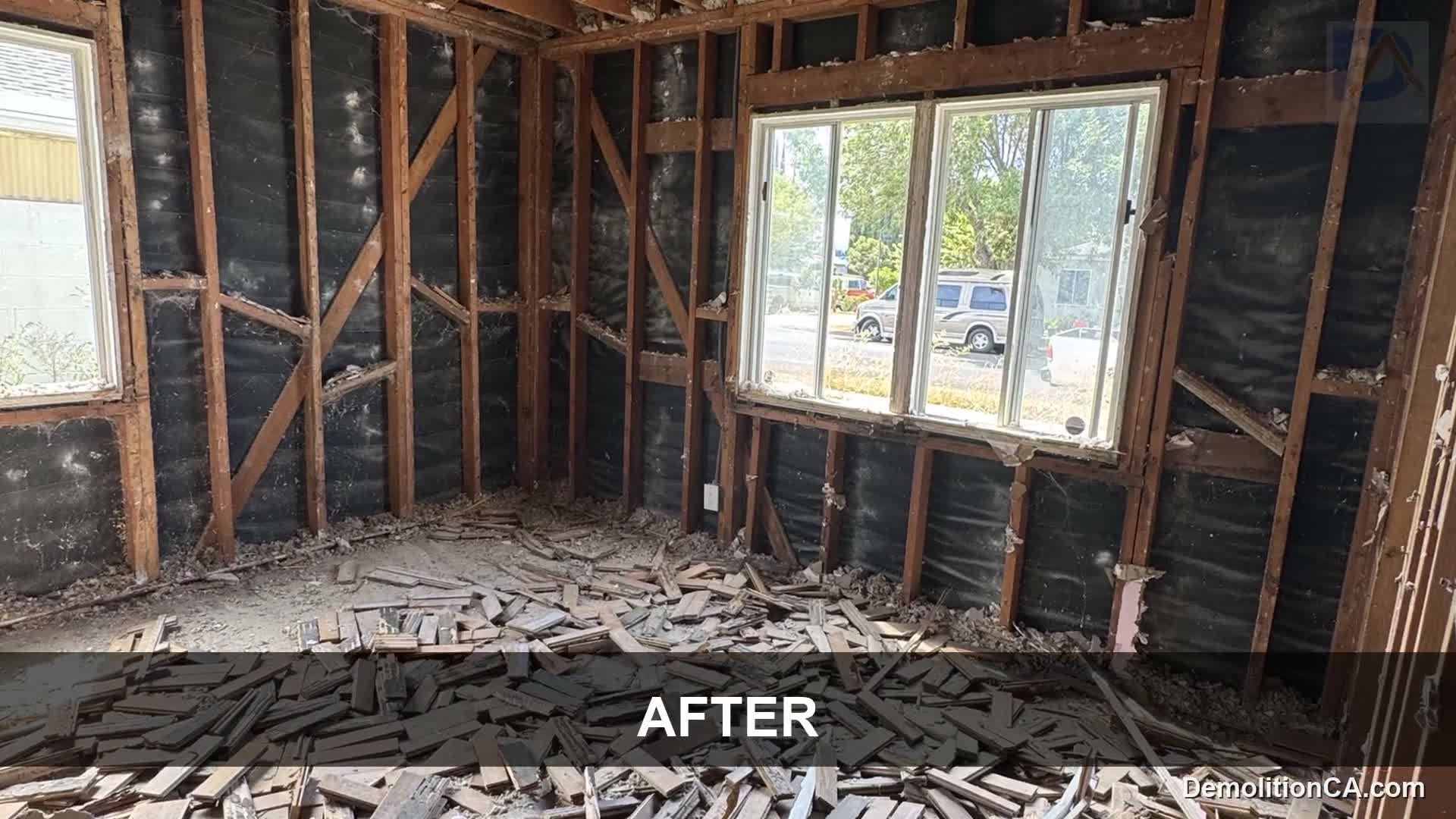
Agree whether completion leaves an inspection opening, exposed framing, retained substrate or another documented condition. Temporary closure, patching and reconstruction should be specifically included or assigned to the next trade.
The price reflects precision, assembly layers, utilities, access, protection and disposal, not just square footage. DemolitionCA is a division of Coastline DC Inc., operating since 2002, CSLB #813394. General business availability is Sunday–Friday, with no Saturday work. Local permitted conditions and project requirements govern the onsite sequence.
Questions about your project
Can selective demolition help investigate concealed damage?
Yes, an investigation opening can be scoped, but its location, permissions and temporary condition should be agreed before disturbance.
Can you guarantee existing edges will need no repair?
No. The assembly and finish condition affect the result. Discuss retained-edge expectations and repair responsibilities in advance.
Can the next trade specify the opening?
Yes. Coordinate dimensions and access needs with that trade while checking structure, services and applicable approvals.
Explore related services
Selective Demolition in Sherman OaksSelective DemolitionSherman Oaks service areaCompany project videosCoastline DC customer reviewsLocal planning resources
Requirements depend on the property and proposed work. Sources checked November 2, 2026.