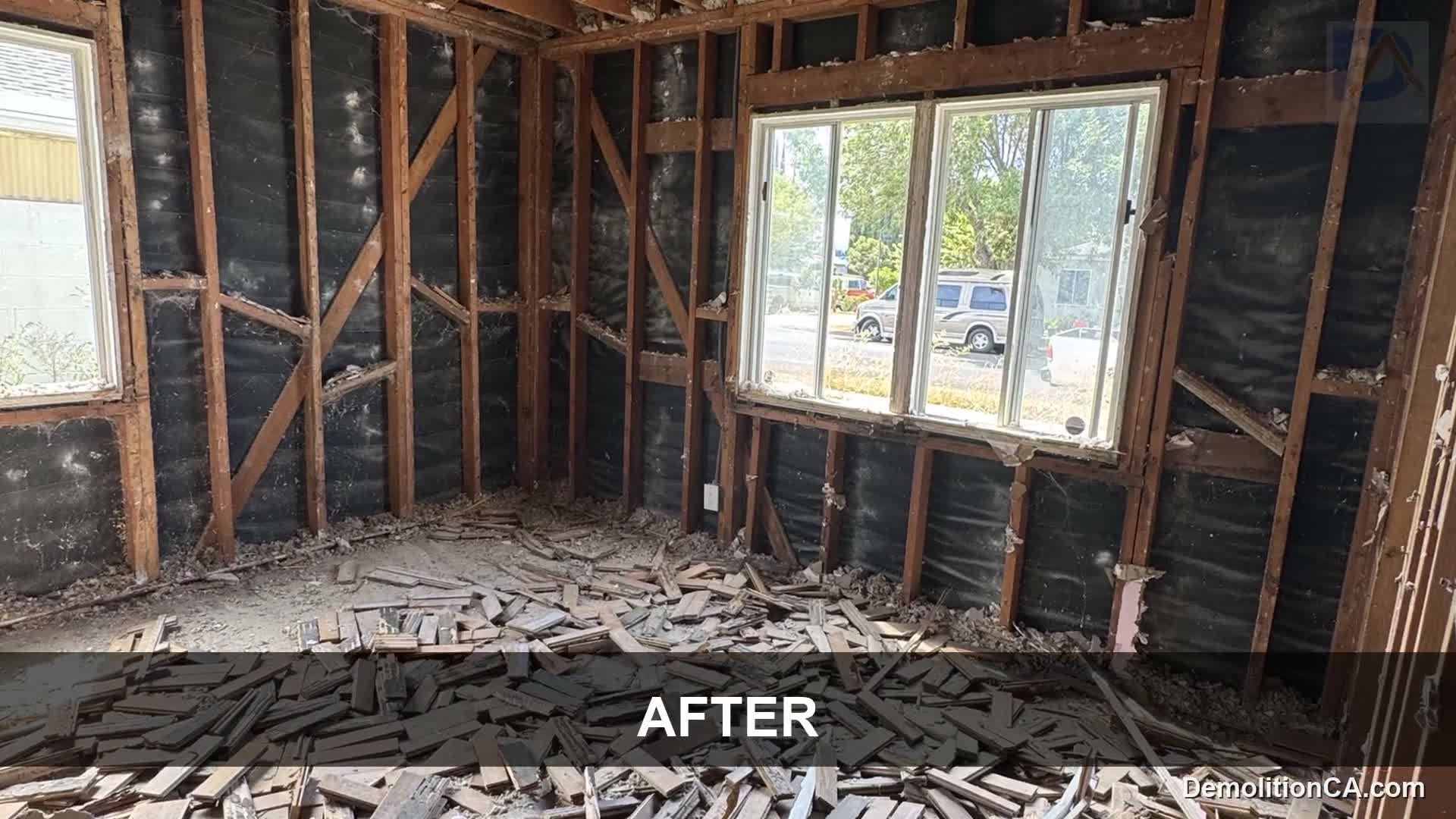
Mark exactly what the instruction includes
Identify each wall finish, cabinet, surface, ceiling area or other component to be removed. State whether the removal stops at a substrate or includes the underlying assembly. Drawings should show retained areas and use the current revision, supported by an onsite walkthrough.
A line on a drawing does not reveal every concealed connection. Where an element meets structural framing or a service, obtain the information needed before choosing the removal method. Do not enlarge the scope merely because an adjacent item looks easier to remove at the same time.
Protect the retained investment
Review floors, stone edges, doors, cabinetry and finishes near the work. Determine practical separation, movement routes and staging so debris does not travel unnecessarily through completed rooms. Salvage items need a separate plan for removal and storage.
For a property with limited loading or difficult access, consider how material size and debris weight affect handling. Controlled removal may involve more manual effort than an unrestricted open-space demolition, which should be reflected in the proposal.
Coordinate services and structural boundaries
Establish who confirms and isolates affected utilities and which services must remain available. A supposedly unused line should not be assumed inactive. Changes to load-bearing elements require appropriate design and approval rather than a field decision based on appearance.
Potentially hazardous materials should be assessed through qualified arrangements where applicable. Ordinary selective demolition does not automatically include testing, remediation or certification of retained materials.
Verify the Bel Air parcel and scope
Bel Air projects use the applicable City of Los Angeles process. Confirm parcel conditions and any required approvals for the specific alteration or removal. A neighborhood or postal label does not determine the complete permit path.
If a parcel is subject to hillside or specific-plan controls, identify the relevant requirements with the responsible authority. An internal scope and an exterior opening may be reviewed differently; do not assume one authorization covers both.
Agree on checkpoints and completion
Prepare a written scope, protection plan and service-isolation responsibilities. Establish a checkpoint when concealed construction becomes visible so the owner or design team can resolve unexpected conditions before work expands. Complete debris removal and review retained elements against the agreed handoff.
Price and time depend on precision, access, material layers, protection, salvage and the number of trade interfaces. A focused area can still be complex. The estimate should explain these factors rather than rely on a universal demolition rate.
Company and availability
DemolitionCA is the demolition division of Coastline DC Inc., established in 2002. CSLB #813394. General business availability is Sunday-Friday; closed Saturday. Onsite work follows local permitted days, hours and project conditions.
Questions about your project
Can you preserve the surface next to an opening?
That can be assessed, but the attachment, condition and removal method matter. The proposal should state protection and any limitations, without promising damage-free salvage.
Who decides if a hidden condition changes the work?
Agree on the decision process before starting. Document the condition and obtain the appropriate owner or design-team direction instead of silently extending removal.
Is selective demolition necessarily nonstructural?
No. The term describes limited scope, not structural status. Each affected element needs assessment and appropriate approvals.
Explore related services
Selective Demolition in Bel AirSelective DemolitionBel Air service areaCompany project videosCoastline DC customer reviewsLocal planning resources
Requirements depend on the property and proposed work. Sources checked November 2, 2026.